How roofing companies can stop losing inspections to slow replies, missed follow-up, and inbox chaos
Roofing Lead Follow-Up: Book More Inspections | LumioForge

Date
Author
LumioForge Roofing Response Team
Roofing Lead Follow-Up: How to Book More Inspections Without Buying More Leads
Most roofing companies do not have a lead problem first.
They have a follow-up problem.
A homeowner fills out a form, asks about a roof inspection, checks a calculator, or replies to an ad. Then the next step depends on whoever happens to see the notification first.
Sometimes the owner calls. Sometimes the office replies. Sometimes the rep gets the lead. Sometimes nobody owns the second touch.
That is how good roofing leads go cold.
This guide shows how to tighten the follow-up process so more existing leads turn into booked inspections before you spend more money on ads, directories, or lead vendors.
Quick answer
To book more roofing inspections, respond fast, ask for one clear next step, follow up more than once, and stop automation as soon as the homeowner replies.
A simple roofing follow-up system should include:
instant first response
clear owner for the lead
short follow-up cadence
reply detection
booked inspection tracking
internal handoff when someone replies
If you only fix one thing, fix ownership. Every lead should have a clear next action and a person responsible for it.
Why buying more leads usually does not fix the real issue
Buying more leads can help if your follow-up process is already strong. But if leads are sitting unanswered, more volume just creates more missed opportunities.
Before increasing spend, answer these questions:
How fast does the first response go out?
Who owns the second touch if the homeowner does not answer?
What happens if the homeowner replies after hours?
Does follow-up stop when the homeowner replies?
Can you see which leads booked and which ones went cold?
If the answers are unclear, the next best move is not always more traffic. It is a cleaner response workflow.
For after-hours leads specifically, use the separate guide on what to send before the office opens.
The follow-up problem usually starts after the first touch
Many roofing companies do send the first message.
The problem is what happens after that.
The homeowner does not answer. The office gets busy. The rep assumes someone else is handling it. The owner thinks the CRM sequence will cover it. The lead never gets a real second or third touch.
That is the gap.
A good follow-up system should make the next action obvious:
Lead status | Next action | Owner |
|---|---|---|
New form submission | Call or text immediately | Office or assigned rep |
No answer after first touch | Follow up later the same day | Assigned owner |
Homeowner replies | Stop automation and respond manually | Person assigned to inbox |
Inspection booked | Mark as booked and stop sales follow-up | Scheduler or rep |
No response after cadence | Mark as cold or nurture | Office |
The important part is not having the perfect CRM. The important part is making sure no lead is floating around without an owner.
A practical roofing follow-up cadence
The exact cadence depends on your company, but this is a strong starting point:
Touch | Timing | Channel | Goal |
|---|---|---|---|
1 | Immediately | Call + text or email | Confirm the request and ask for the inspection time |
2 | 1–3 hours later | Text or email | Make the next step easy |
3 | Next business morning | Call or text | Catch the homeowner when available |
4 | 2 days later | Text or email | Ask if they still want help |
5 | 5–7 days later | Email or text | Close the loop politely |
This is not about annoying homeowners. It is about staying organized long enough to reach people who are busy, comparing contractors, or checking their options.
For a deeper breakdown of contact frequency, see how many times you should contact a homeowner.
What the first message should say
The first message should be short and specific.
A simple version:
Thanks for reaching out. We received your roofing request. Are you looking for a repair, replacement, or inspection?
A stronger version when the goal is to book an appointment:
Thanks for reaching out. We received your roofing request. We can help with the next step. Are you available today or tomorrow for a quick inspection call?
If the lead came from a calculator, connect the message to what they just did:
Thanks for using the roofing calculator. The estimate is only a starting point, but we can help confirm the actual scope. Are you available today or tomorrow to schedule an inspection?
That works better than a generic “we will be in touch” message because it moves the homeowner toward a decision.
Use tools to create better intent, not just more traffic
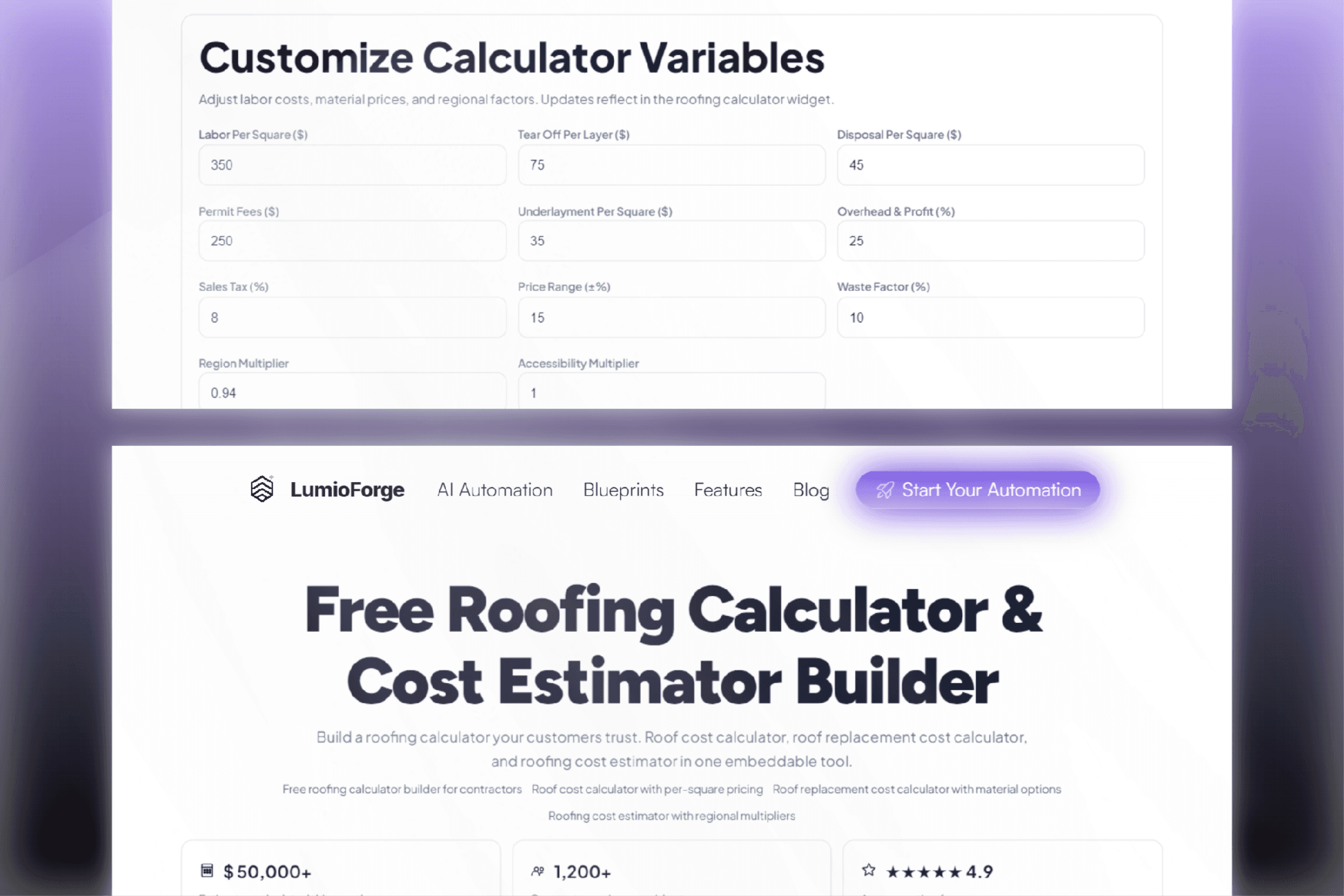
Roofing calculators can help because they attract homeowners who are already thinking about cost, materials, pitch, or project size.
For example:
A homeowner using a roof pitch calculator may be trying to understand slope or complexity.
A homeowner using a shingle bundle calculator may be closer to a material or replacement question.
A homeowner reading the roofing calculator guide may be comparing estimates before contacting a contractor.
But the tool is only the start. The follow-up process decides whether that intent becomes a booked inspection.
What each follow-up should do
Do not send the same message five times.
Each follow-up should remove a different obstacle.
Follow-up 1: confirm and ask for the next step
Thanks for reaching out. We received your roofing request. Are you available today or tomorrow for a quick inspection call?
Follow-up 2: make the reply easy
Just checking back. If it helps, reply with “repair,” “replacement,” or “inspection” and we will point you to the right next step.
Follow-up 3: add timing
We still have a few inspection windows this week. Do you want us to check availability for your address?
Follow-up 4: close the loop
I do not want to keep bothering you. Should we close this out for now, or are you still looking for help with the roof?
The last message is important because it gives the homeowner permission to say no. It also helps your team stop wasting attention on leads that are not active.
Stop the sequence when the homeowner replies
A follow-up system should never keep acting like the homeowner is silent after they reply.
The rule is simple:
Reply received = stop automation + alert the person who owns the conversation.
This prevents awkward messages and makes the company feel more organized.
If a homeowner asks a question and then receives another automated follow-up, trust drops. If they reply and a real person responds quickly, the experience feels much better.
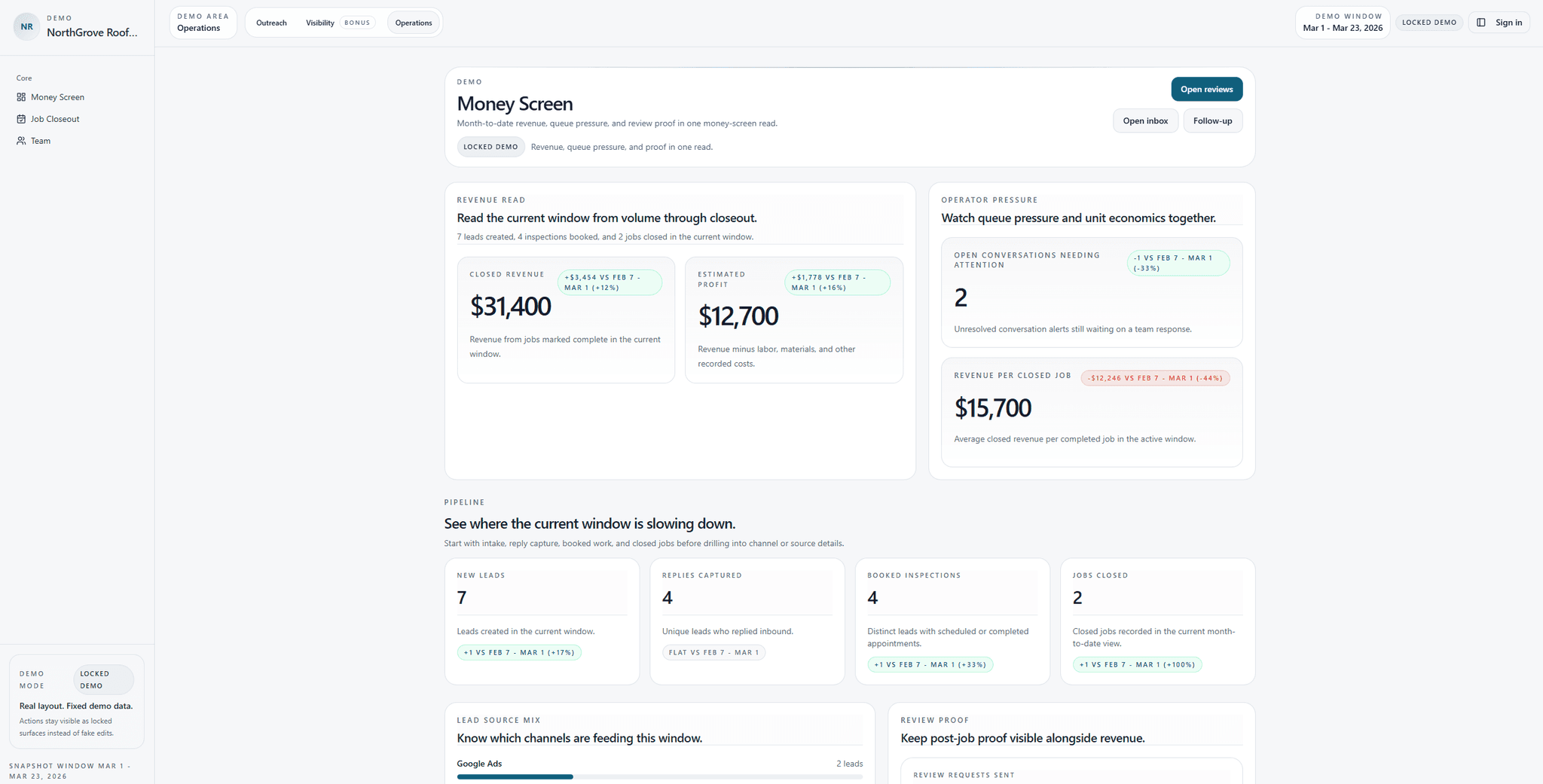
What to track weekly
You do not need to overcomplicate reporting.
Start with these numbers:
new roofing leads
first response time
leads with at least one follow-up
leads with two or more follow-ups
replies received
inspections booked
leads marked cold
leads with no owner
The most important cleanup number is “leads with no owner.” If that number exists, the process is still leaking.
A simple checklist to fix follow-up now
Use this checklist before buying more leads:
Every lead gets an instant first response.
Every lead has an owner.
Every lead has a next action.
The second touch is scheduled if the homeowner does not answer.
The sequence stops when the homeowner replies.
After-hours leads get a clear message.
Booked inspections are marked as booked.
Cold leads are closed out or moved to nurture.
This does not require a perfect system. It requires consistency.
Bottom line
More leads can help, but only after the follow-up process is ready for them.
If a roofing company responds quickly, owns every next step, follows up more than once, and stops automation when a homeowner replies, the same traffic can produce more booked inspections.
That is the real opportunity: not just getting more homeowners to the website, but making sure fewer of them disappear after they raise their hand.