A practical roofing follow-up cadence for contacting homeowners without sounding pushy, including timing, message goals, stop rules, and tracking tips.
Roofing Follow-Up Cadence: How Many Touches? | LumioForge
Date
Author
LumioForge Roofing Response Team
Roofing Lead Follow-Up: How Many Times Should You Contact a Homeowner?
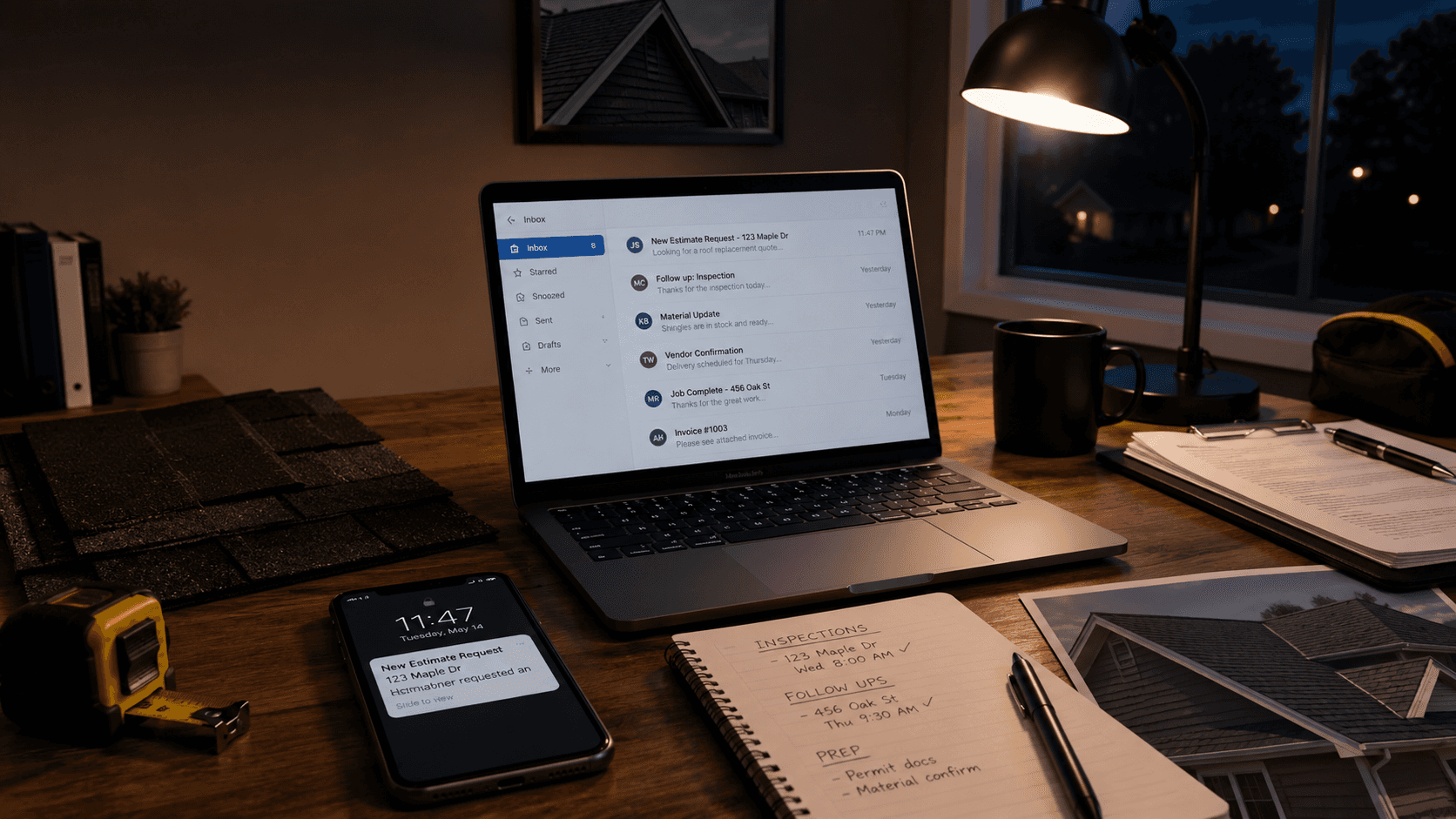
A homeowner fills out an estimate form on your roofing website.
Your crew is on a roof. The office is handling supplier calls. The owner is driving between jobs. The message lands in the inbox, but nobody sees it right away.
By the time someone replies tomorrow morning, the homeowner may have already talked to another roofer and booked the inspection.
For most roofing estimate or inspection requests, a practical starting point is:
1 immediate response + 5–7 helpful follow-up touches over 10–14 days.
That does not mean every homeowner should get the exact same sequence. A storm-damage lead, an active leak, and a non-urgent replacement inquiry should not be handled the same way. But the principle is simple: respond fast, follow up consistently, and stop when the homeowner replies, books, says no, or asks you to stop.
Public roofing-specific data on the perfect number of follow-ups is limited. But general lead-response research is clear on one thing: the first response matters most when the homeowner has just raised their hand.
For the broader follow-up process, read Roofing Lead Follow-Up: Book More Inspections. For leads that arrive after closing time, read After-Hours Roofing Leads: What to Send.
How many times should a roofing company follow up?
A practical starting cadence is:
Immediate first response, then 5–7 total touches over 10–14 days.
A “touch” can be a call, text, voicemail, or email. It should have a clear purpose. The goal is not to keep saying “just checking in.” The goal is to make it easy for the homeowner to book the inspection, ask a question, or tell you they are no longer interested.
For a normal roof replacement, repair, or inspection request, the sequence might include:
Immediate text or email confirmation
Quick call attempt
Same-day follow-up
Next-day follow-up
Day 3 follow-up
Day 7 follow-up
Day 14 close-out message
Stop the sequence when the homeowner:
replies
books an inspection
says they chose someone else
says no
asks you to stop contacting them
The biggest mistake is usually not “following up too much.” It is letting follow-up continue after the homeowner already replied. That makes the company look disorganized.
Why roofing follow-up has to be fast
Roofing leads are not casual newsletter signups. Many homeowners are dealing with a real problem:
a roof leak
missing shingles
storm damage
insurance claim questions
a failed inspection
a replacement project they have been delaying
They may contact several companies in one sitting. The roofer who responds while the homeowner still remembers filling out the form has a better chance to start the conversation.
General lead-response research supports this idea. InsideSales lead-response research has reported better results when the first call happens quickly and when teams make multiple follow-up attempts. That research is not roofing-specific, so it should not be treated as proof that every roofing lead needs exactly seven touches. But it does support the larger point: speed and consistency matter.
For a roofing company, slow response can send the wrong signal before you even inspect the roof.
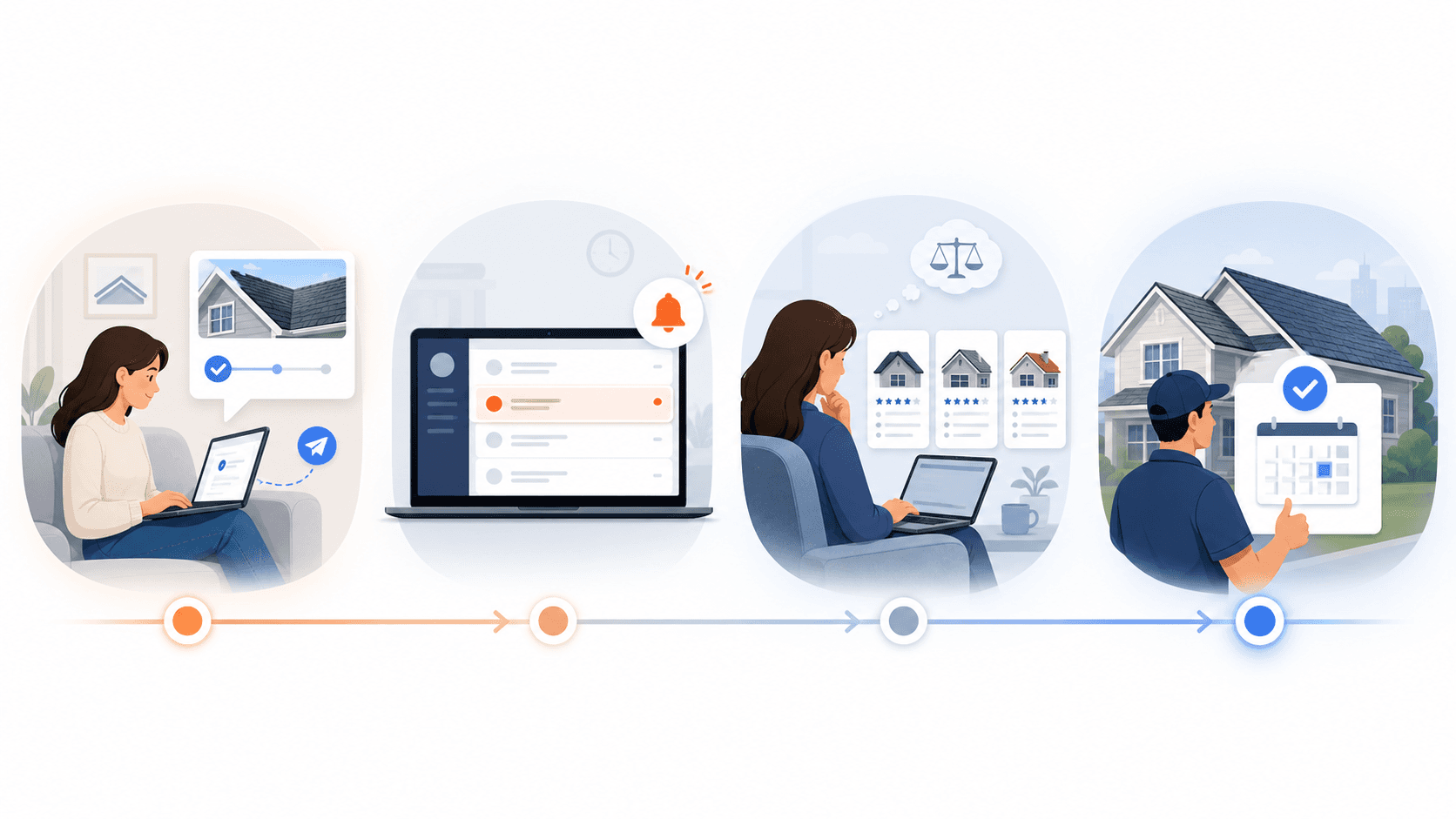
The homeowner may think:
“They must be too busy.”
“They are not organized.”
“If it takes this long to call back, what happens after I hire them?”
“The other company was easier to schedule with.”
That is why the request should not sit in the inbox until tomorrow. The first reply should happen while the homeowner still remembers asking for help.
A practical roofing follow-up cadence
Before copying any cadence, separate the lead type.
An urgent leak or storm-damage request should get faster first-day follow-up. A normal replacement inquiry can use a calmer cadence. A post-estimate follow-up should be more specific and consultative because the homeowner has already seen the roof, the scope, and the price.
The cadence below is not a law. It is a starting point for a small or mid-sized roofing company that wants to stop losing good estimate requests because nobody followed up.
Use this as a starting point. Adjust based on your market, season, crew capacity, lead source, and urgency.
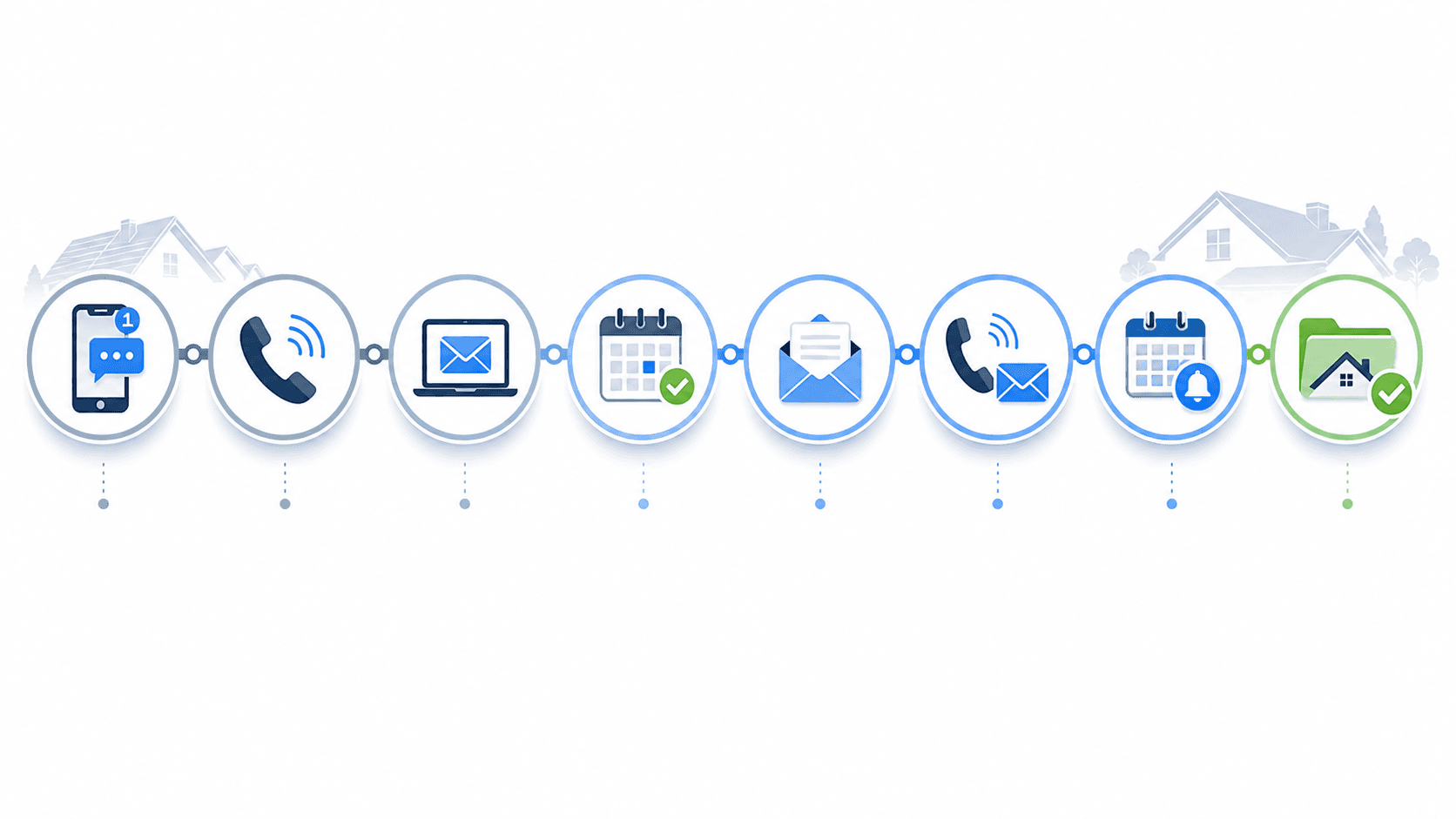
Practical roofing follow-up cadence
Timing | Channel | Goal | Example message |
|---|---|---|---|
0–5 minutes | Text or email + call if possible | Confirm the request and try to book while interest is fresh | “Hi Sarah, this is Mark with RidgeLine Roofing. I saw your roof inspection request come in. Do you have 2 minutes to pick a time for us to take a look?” |
5–15 minutes | Call | Reach the homeowner before they move on | “Hi Sarah, this is Mark with RidgeLine Roofing. I’m calling about the roof inspection request you just submitted. I’ll also send you a quick text so scheduling is easy.” |
1–2 hours | Text | Give a low-friction scheduling option | “No problem if now is busy. We have inspection openings tomorrow afternoon and Thursday morning. Which is easier for you?” |
Same day | Add credibility and details | “Thanks for reaching out. We inspect the roof, document what we find, and explain repair vs. replacement options before anything is decided.” | |
Day 1 | Call or text | Second booking attempt | “Just checking that your request did not get buried. Do you still want us to look at the roof this week?” |
Day 3 | Email or text | Help them make a decision | “If you are comparing roofers, a good inspection should include photos, clear next steps, and a written scope. We can help with that if you still need someone.” |
Day 7 | Stay useful without pressure | “Wanted to follow up once more. Are you still looking for help with the roof, or did you already get it handled?” | |
Day 14 | Text or email | Close the loop politely | “I’ll close this out for now so we do not keep bothering you. If you still need help with the roof, reply here and we can reopen it.” |
This cadence should not be copied blindly. A storm-damage lead may need a much tighter first-day sequence. A non-urgent roof replacement inquiry may need fewer touches. A referral may not need the same automated follow-up if the owner is personally handling it.
The rule is simple:
Follow up until the conversation has a clear next step.
New estimate request vs. post-estimate follow-up
Not all roofing follow-up is the same. A new inspection request and a post-estimate follow-up need different messages.
New inspection or estimate request
This is the moment before the inspection is booked.
The homeowner has not met you yet. They may not trust you yet. Your job is to make the next step easy.
Good new-lead follow-up should:
respond quickly
confirm you received the request
ask one simple scheduling question
avoid a long sales pitch
make it clear a real person can help
route the conversation to the right owner, office manager, or sales rep
Example:
“Hi Jenna, this is Alex with Northside Roofing. I saw your roof estimate request come through. We can usually inspect within the next couple of days. Is morning or afternoon better for you?”
Post-estimate follow-up
This happens after the inspection and quote are already sent.
The homeowner is no longer asking, “Who can come look?” They are asking:
“Do I trust this company?”
“Is this price fair?”
“What happens next?”
“Can I wait?”
“What did the other roofer say?”
“How does insurance affect this?”
Post-estimate follow-up should be more helpful and specific. Remind them what was found, what the estimate covers, and what decision they need to make.
Example:
“Hi Jenna, I wanted to follow up on the roof replacement estimate we sent yesterday. The main issue we saw was the aging shingle system on the rear slope and the soft decking near the valley. Happy to walk through the estimate if anything is unclear.”
For post-estimate follow-up, a 10–14 day window is often still useful, but the cadence can be slower and more consultative. You are not just trying to catch them at the right moment. You are helping them feel confident enough to choose.
How many follow-ups are too many?
Follow-up becomes too much when the messages stop helping the homeowner.
It is too many when:
the homeowner already said no
they asked you to stop
they booked with another roofer
every message says the same thing
the sequence ignores the urgency of the issue
the homeowner replied, but automation keeps sending reminders
multiple people from your company contact them without knowing the other person already did
A good follow-up system should have stop conditions.
The cleanest rule is:
When the homeowner replies, automated follow-up stops and the real conversation goes to the right person.
That is especially important for roofing teams. If a homeowner replies with “Can you come Friday?” and then receives another automated “just checking in” message the next morning, it looks like nobody is actually reading the inbox.
The same applies after a booked inspection. Once the appointment is on the calendar, the sequence should switch from “book the inspection” to appointment reminders, preparation details, or human handoff.
Should roofers call, text, or email first?
Most roofing companies should use a mix of call, text, and email. Each channel has a different job.
Call first when urgency is high
A call is best when:
there is active leaking
the lead came from storm damage
the homeowner asked for help today
the request included words like “urgent,” “water coming in,” or “emergency”
you need to book fast before another contractor does
For urgent leads, call quickly. If they do not answer, leave a short voicemail and send a text.
Text when scheduling needs to be easy
Text is useful because homeowners can answer quickly without stopping their day.
Use text for:
confirming the request
offering time slots
asking “morning or afternoon?”
reminding them about inspection times
closing the loop politely
Keep texts short. Do not send a paragraph that looks like a marketing blast.
Email when details matter
Email is better for:
inspection details
estimate recaps
financing information
insurance claim documentation
company credibility
photos or next steps
longer explanations after the inspection
Email is also useful when multiple decision-makers are involved.
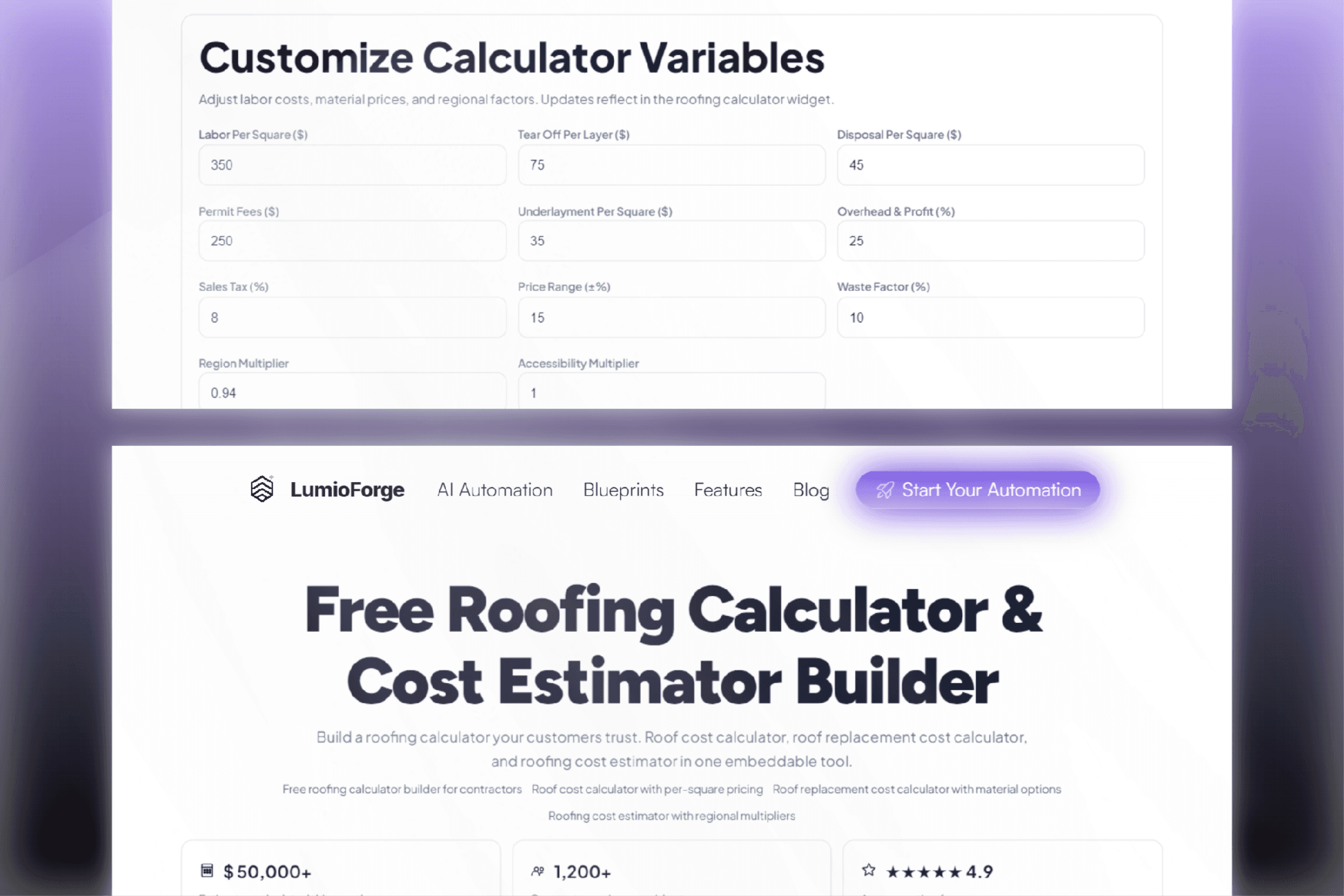
If the homeowner asks about roof size, pitch, material quantity, or waste, your team can use the LumioForge free roofing calculators to answer faster. Useful tools include the Roof Pitch Calculator, Roof Area Calculator, Shingle Bundle Calculator, and Roof Waste Calculator.
Quick compliance note
Before texting, calling, or emailing leads, make sure your company follows applicable consent rules, opt-out requirements, platform rules, and state or federal law. This is not legal advice. For email, review the FTC’s CAN-SPAM Act compliance guide. For calls and texts, review the FCC’s robocalls and robotexts guidance and speak with a qualified advisor if needed.
Roofing follow-up examples you can copy
Use these as starting points. Replace the company name, tone, and details so they sound like your team.
First text after form submit
Hi {{first_name}}, this is {{rep_name}} with {{company_name}}. I saw your roof estimate request come in. Do you have a few minutes today to pick an inspection time?
First voicemail
Hi {{first_name}}, this is {{rep_name}} with {{company_name}}. I’m calling about the roof inspection request you just submitted. We can help take a look and explain the next steps. I’ll send you a quick text too so it’s easy to reply.
First email
Subject: Roof inspection request received
Hi {{first_name}},
Thanks for reaching out to {{company_name}}. We received your roof inspection request and can help you figure out what is going on.
The next step is simple: we schedule a time, inspect the roof, document what we find, and explain repair or replacement options clearly.
Are mornings or afternoons usually better for you?
— {{rep_name}}
Day 1 follow-up
Hi {{first_name}}, just making sure your roof request did not get buried. Do you still want us to schedule an inspection this week?
Post-estimate follow-up
Subject: Following up on your roof estimate
Hi {{first_name}},
I wanted to follow up on the estimate we sent for your roof.
The main items included were:
{{scope_item_1}}
{{scope_item_2}}
{{scope_item_3}}
If you are comparing quotes, I’m happy to walk through what is included so you can compare them clearly.
Do you want me to explain anything in the estimate?
Urgent leak or storm damage follow-up
Hi {{first_name}}, this is {{rep_name}} with {{company_name}}. I saw you mentioned a leak or storm damage. If water is actively coming in, reply “urgent” and we’ll try to get you routed faster.
Close-out message
Hi {{first_name}}, I do not want to keep bothering you, so I’ll close this out for now. If you still need help with the roof, reply here and we can reopen it.
The follow-up system small roofing companies should use
Small roofing companies do not need a complicated enterprise sales process. They need a simple system that prevents good requests from getting buried.
A strong roofing follow-up system should include:
Instant first response
Every website form, quote request, inspection request, or inbound lead should get a quick confirmation.
A short follow-up sequence
Use a practical cadence across call, text, and email. The sequence should be helpful, not pushy.
Stop-on-reply
When the homeowner replies, the automated sequence should stop. The conversation should become human.
Internal escalation
If a homeowner replies and nobody acknowledges it, the right person should be alerted. For example, the owner, office manager, or sales rep gets notified now, then again later if the conversation is still not acknowledged.
Clear owner or rep assignment
Every lead should have a person responsible for the next step.
Shared inbox or handoff view
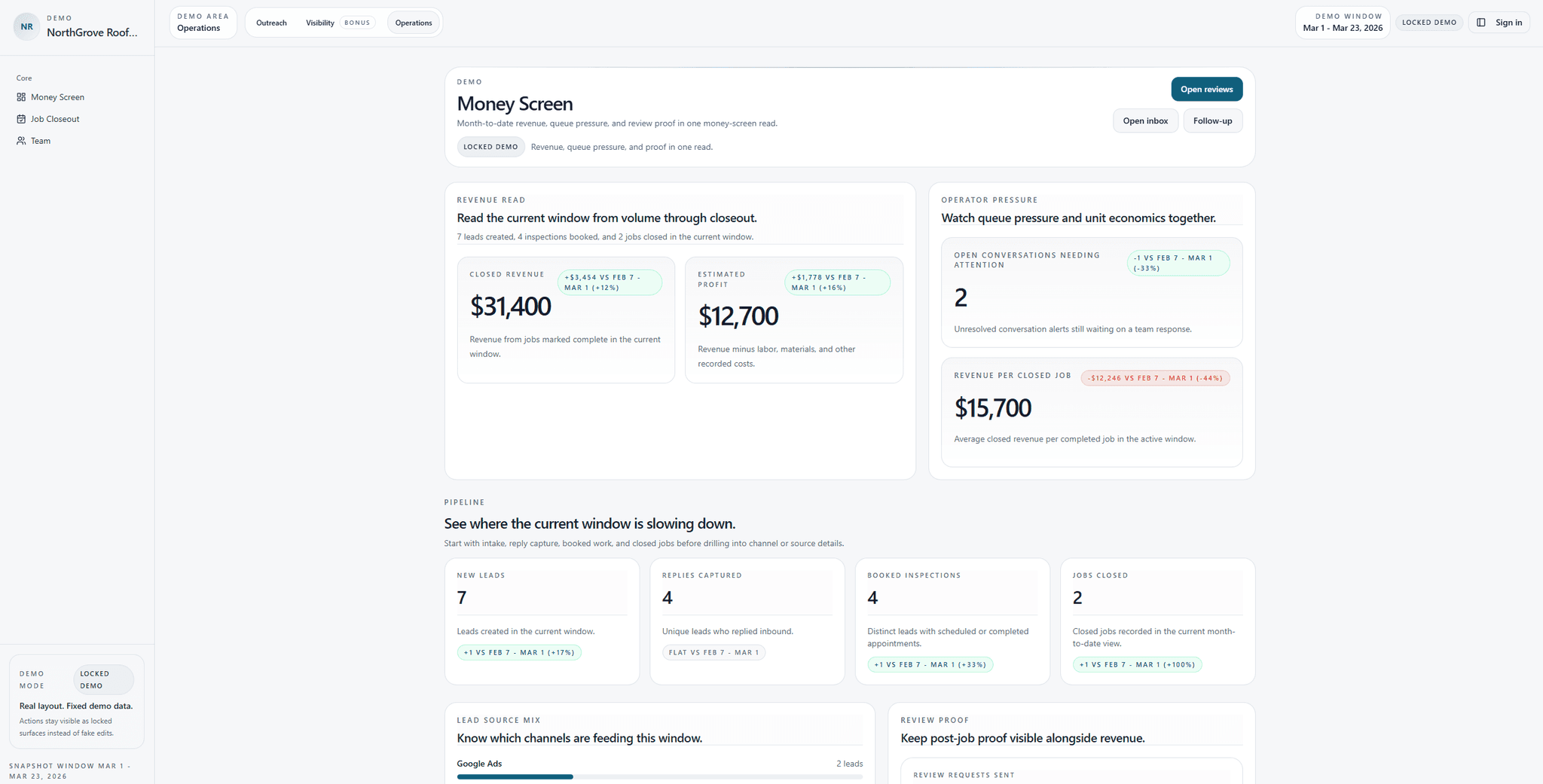
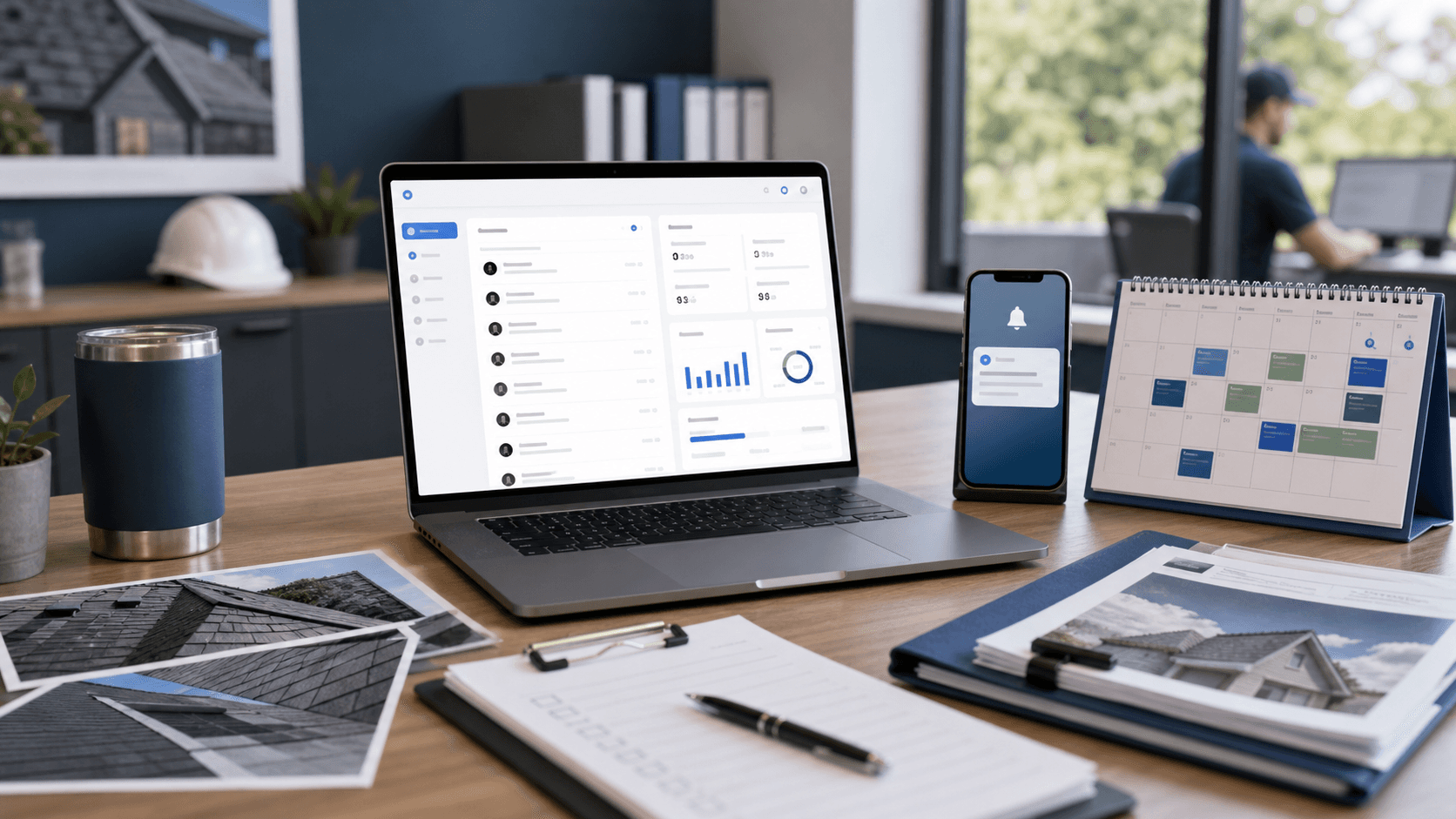
The team should be able to see who is waiting, who replied, who booked, and who needs attention.
Templates that sound human
Templates should save time, but they should not sound like a robot wrote them.
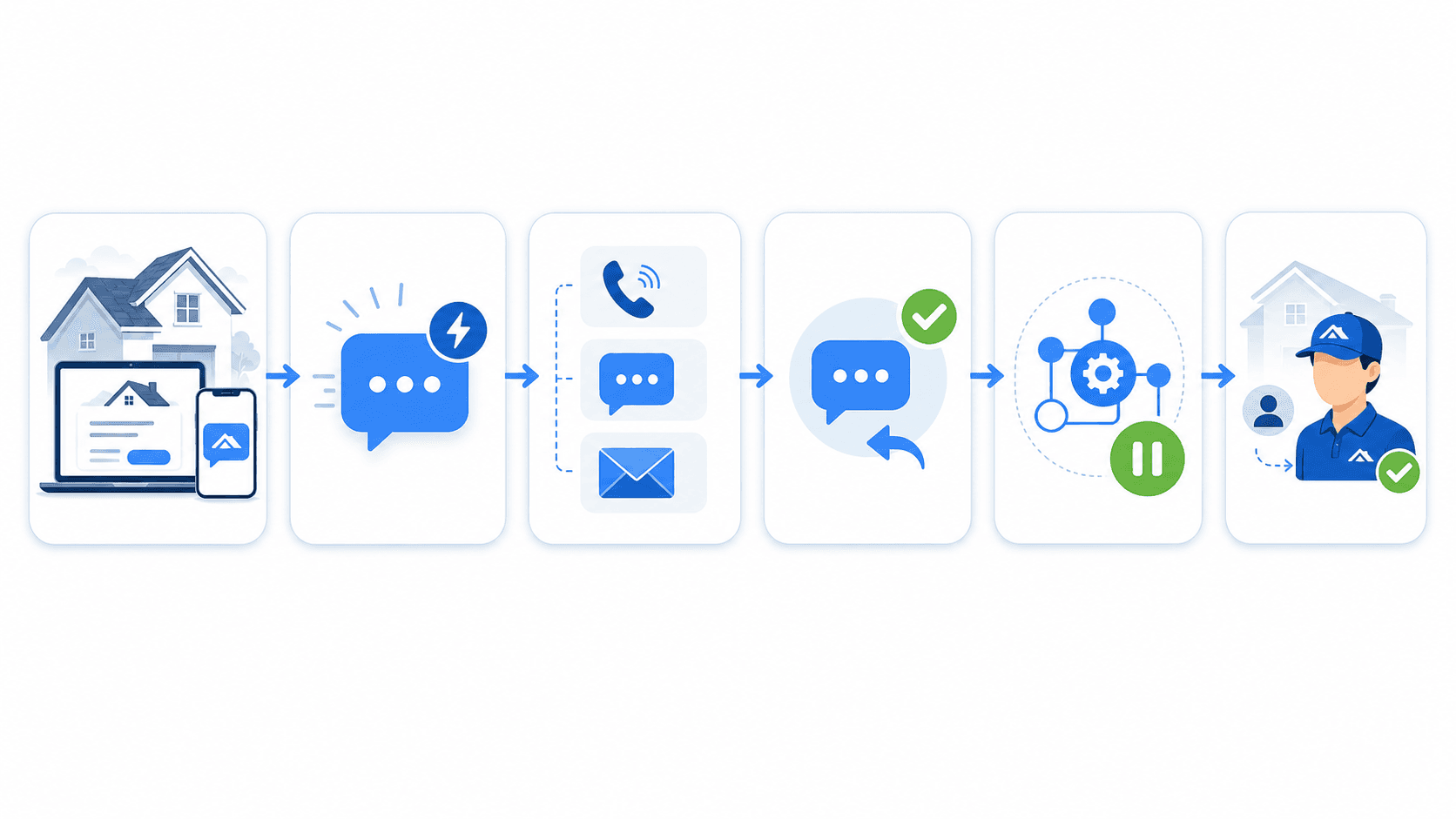
The point is not to automate every homeowner conversation.
The point is to make sure no good request gets buried, no homeowner reply gets missed, and no automated follow-up keeps going after a real person has already answered.
This is the type of workflow LumioForge is built around for roofing companies: fast first response, automated follow-up, stop-on-reply, missed-reply escalation, and clean inbox handoff.
You can explore the free roofing tools, use the Roof Pitch Calculator, or claim your free setup map if you want the follow-up system mapped to your actual lead sources.
Simple roofing follow-up checklist
Use this checklist before you spend more money on new leads.
Website estimate forms go to a monitored inbox
New requests trigger an immediate confirmation
Urgent leak or storm wording is flagged
Someone calls new leads quickly when appropriate
Text follow-up is short and scheduling-focused
Email follow-up includes useful details, not generic sales copy
Every lead has an owner or rep assigned
The team can see who has not been contacted
Follow-up stops when the homeowner replies
Booked inspections are removed from “new lead” follow-up
Post-estimate follow-up is separate from new-lead follow-up
Close-out messages are polite and low-pressure
Opt-out and consent rules are respected
Missed replies trigger internal alerts
The owner or manager can review what is waiting each day
Related roofing follow-up guides
FAQs
How many times should I follow up with a roofing lead?
For most roofing estimate or inspection requests, use about 5–7 helpful touches over 10–14 days. Start with an immediate response, then follow up through a mix of call, text, and email. Stop when the homeowner replies, books, says no, chooses someone else, or asks you to stop.
How quickly should a roofing company respond to an estimate request?
Respond as fast as possible, ideally within minutes for fresh form fills and urgent roof problems. General lead-response research supports fast first response, especially in the first few minutes, though it is not roofing-specific. The practical roofing rule is simple: do not let the request sit in the inbox until tomorrow.
Should roofers text or call first?
For urgent leaks, storm damage, or high-intent estimate requests, call quickly and follow with a short text if they do not answer. For less urgent requests, a quick text plus email can work well. The best system usually uses all three: call for urgency, text for scheduling, and email for details.
How long should I follow up after sending a roof estimate?
A practical post-estimate follow-up window is 10–14 days, with a few thoughtful touches. The tone should be different from a new-lead sequence. After the estimate, focus on answering questions, clarifying the scope, comparing options, and helping the homeowner understand the next step.
What should I say in a roof estimate follow-up email?
Mention the specific estimate, remind them what the inspection found, and offer to explain the scope. Avoid vague lines like “just checking in.”
A better message is:
“I wanted to follow up on the estimate we sent yesterday. The main items included decking repair near the valley, underlayment replacement, and new architectural shingles. Happy to walk through it if anything is unclear.”
When should I stop following up with a homeowner?
Stop when the homeowner replies, books, says no, says they chose someone else, asks you to stop, or becomes an active conversation with a real person on your team. Automation should not continue after a reply.
Can roofing follow-up be automated?
Yes, parts of roofing follow-up can be automated: instant confirmation, reminders, scheduled follow-up messages, missed-reply alerts, and handoff notifications. The important part is that automation should support the team, not replace judgment. When the homeowner replies, the system should stop the sequence and route the conversation to a person.
Will automated follow-up annoy homeowners?
It can if it is too frequent, repetitive, or continues after they reply. It is less annoying when the messages are short, useful, timed around the homeowner’s request, and easy to stop. The goal is to help them book or make a decision, not pressure them.
Conclusion
Roofing lead follow-up does not need to be complicated.
The first response matters most. The homeowner should hear from you while the request is still fresh, especially if there is a leak, storm damage, or urgent repair need.
After that, 5–7 thoughtful touches over 10–14 days is a practical starting cadence for most estimate and inspection requests. Stop when the homeowner replies, books, says no, chooses another company, or asks you to stop.
The real solution is not memory. It is a system.
If your team is relying on someone to remember every form fill, missed call, estimate, reply, and follow-up, leads will slip through. A simple response system makes sure the homeowner gets a fast answer, the right person gets notified, and automation stops when the conversation becomes real.
To map this to your actual roofing company workflow, claim your free LumioForge setup map or apply for the Free Roofing Pilot.